Security breaches rarely begin with loud alarms or dramatic incidents. Most threats start quietly — a vehicle slipping through an open gate, an unauthorized visitor entering a restricted zone, or someone tailgating behind an approved employee. In many situations, the first 10 seconds Unauthorized Entry determine whether a property remains secure or becomes vulnerable.
For residential communities, corporate offices, industrial facilities, hospitals, warehouses, and commercial spaces, those first few moments are critical. A delayed response can lead to theft, operational disruption, data breaches, safety concerns, Unauthorized Entry or even long-term reputational damage.
Modern access control systems are designed to react instantly. Intelligent technologies such as RFID systems, boom barriers, ANPR cameras, automated gates, smart parking management, and AI-powered surveillance can identify threats before they escalate.
Companies like Speedgatz are helping businesses and communities build safer environments through advanced vehicular access, pedestrian access, and parking security solutions, Smart Parking Management.
This article explores exactly what happens in the first 10 seconds of unauthorized entry and why smart security systems are becoming essential in modern infrastructure and Unauthorized Entry.
Why the First 10 Seconds Are So Important
The biggest challenge in security is reaction time. Human response alone is often too slow to stop a threat immediately. An unauthorized person can move surprisingly fast once access is gained. Within seconds, intruders may:
- Enter restricted areas
- Access private parking zones
- Reach sensitive operational departments
- Blend into crowds
- Avoid manual monitoring
This is why modern security systems focus on instant detection and automated response instead of relying only on guards or manual processes. The faster a system identifies suspicious activity, the higher the chances of preventing a serious incident.
Second-by-Second Breakdown of Unauthorized Entry
Second 1: Detection Begins
The moment a person or vehicle approaches an entry point, intelligent systems begin scanning activity. Modern access control systems use technologies like:
- Motion sensors
- RFID readers
- CCTV analytics
- ANPR cameras
- Infrared sensors
- AI-powered surveillance
These systems continuously monitor entrances and exits. If unusual behavior is detected, the system immediately begins verification.
For example:
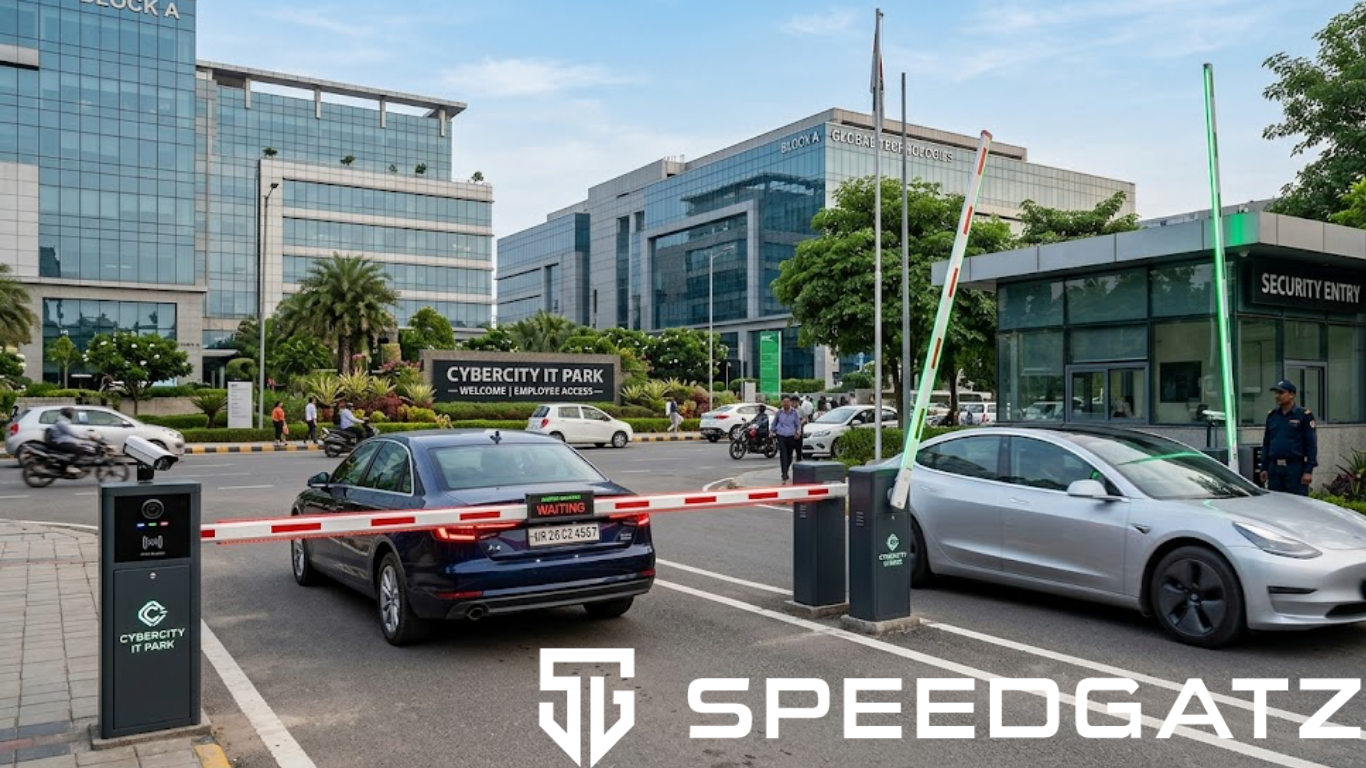
- A vehicle without authorization approaching a boom barrier
- A pedestrian attempting entry without valid credentials
- Tailgating behind another authorized user
Detection happens almost instantly.
Seconds 2–3: Credential Verification
Once movement is detected, the system checks whether the person or vehicle has permission to enter.
Vehicle Verification Includes:
- RFID tag authentication
- License plate recognition
- Visitor database validation
- Parking access permissions
Pedestrian Verification Includes:
- Access card validation
- Facial recognition
- Biometric authentication
- Visitor pass verification
If credentials fail, the system automatically flags the activity as suspicious. Traditional security guards may take longer to verify identity manually, but smart systems process information within seconds.
The Growing Problem of Unauthorized Access
Unauthorized entry is becoming a growing concern across industries. As cities become more crowded and infrastructure becomes more complex, security risks continue to increase.
Common Causes of Unauthorized Entry
Tailgating: An unauthorized person follows an authorized user through a gate or access point.
Credential Sharing: Employees or residents may share access cards with unauthorized individuals.
Open Gate Exploitation: Vehicles quickly enter while gates remain temporarily open.
Manual Security Gaps: Human errors or distractions create vulnerabilities.
Weak Parking Management: Uncontrolled parking zones often become easy entry points.
Without intelligent monitoring systems, these risks can go unnoticed until damage has already occurred.
Seconds 4–5: Automated Security Response
This stage is where modern security systems make the biggest difference.
Once unauthorized activity is confirmed, automated responses activate immediately.
Possible Security Actions Include:
- Boom barriers remain locked
- Automatic gate closure
- Security alarms activate
- CCTV recording priority mode begins
- Entry permissions are suspended
- Notifications are sent to security teams
Unlike manual monitoring, automation does not hesitate or get distracted.
This rapid response helps prevent unauthorized individuals from moving deeper into the property.
Why Traditional Security Is No Longer Enough
Many businesses still rely mainly on guards and manual entry systems. While security personnel remain important, traditional methods alone struggle with modern challenges.
Limitations of Manual Security
Human Error: Mistakes can happen during busy hours or long shifts.
Delayed Reaction Time: Manual verification takes longer.
Limited Monitoring: One guard cannot monitor every entry point effectively.
Lack of Real-Time Data: Traditional systems often lack detailed access records.
Security Fatigue: Continuous monitoring can reduce alertness over time.
Smart access systems solve these issues through automation and real-time monitoring.
Seconds 6–7: Threat Containment
If unauthorized access continues, security systems focus on restricting movement inside the property.
Smart Containment Measures Include:
- Locking internal access points
- Restricting elevator permissions
- Blocking parking movement
- Activating emergency protocols
- Sending live alerts to management teams
For industrial environments, this step is especially important because restricted areas may contain sensitive equipment, data, or hazardous operations.
The goal is to isolate the threat before it escalates.
The Role of Smart Parking in Security
Parking areas are often underestimated in security planning. However, they are one of the most vulnerable access points.
Common Parking Security Risks
- Unauthorized vehicle entry
- Parking misuse
- Vehicle theft attempts
- Tailgating vehicles
- Unregistered visitors
Smart parking management systems improve both security and traffic flow.
Features of Intelligent Parking Solutions
- Automated vehicle tracking
- Number plate recognition
- RFID vehicle access
- Real-time parking monitoring
- Controlled entry and exit management
These technologies create safer and more organized environments for residential and commercial properties.
Seconds 8–10: Human Response & Monitoring
By this stage, security teams receive instant alerts and visual access to live monitoring systems.
Security Teams Can:
- Review CCTV footage
- Communicate with guards
- Verify suspicious behavior
- Lock down additional zones
- Dispatch emergency response personnel
Because automated systems already slowed or blocked the threat, security teams can respond more effectively and safely.
This combination of automation and human oversight creates a stronger overall security system.
Industries That Need Smart Access Control Systems
Residential Communities: Modern gated societies need secure visitor and vehicle management systems.
Commercial Buildings: Offices require controlled access to protect employees, clients, and business assets.
Industrial Facilities: Factories and warehouses need restricted access to operational zones.
Hospitals: Healthcare facilities require secure but smooth visitor management.
Educational Institutions: Schools and universities benefit from monitored pedestrian access systems.
Shopping Malls & Public Spaces: High-traffic areas need efficient crowd and parking management solutions.
How Technology Is Changing Modern Security
Security is no longer only about protection after an incident occurs. Today, security focuses on prevention.
Emerging Security Technologies
AI-Powered Surveillance: AI can identify suspicious movement patterns in real time.
Cloud-Based Monitoring: Remote access allows centralized security management.
Touchless Access Systems: Contactless technologies improve convenience and hygiene.
IoT-Connected Infrastructure: Devices communicate with each other for faster response.
Predictive Security Analytics: Future systems may predict threats before they happen.
Businesses and residential communities are increasingly investing in these technologies to stay ahead of modern security challenges.
Why Smart Access Solutions Are the Future
Modern infrastructure requires faster, smarter, and more reliable security systems.
Smart access control offers:
- Faster threat detection
- Better operational efficiency
- Improved traffic flow
- Stronger visitor management
- Reduced human error
- Real-time monitoring
- Scalable security infrastructure
Companies like Speedgatz provide advanced access control, pedestrian security, and parking management solutions that help organizations create safer and more efficient environments.
As cities continue evolving into smart urban ecosystems, intelligent security systems will become an essential part of everyday infrastructure.
Conclusion
The first 10 seconds of unauthorized entry can decide whether a security threat is prevented or allowed to escalate.
In today’s fast-moving world, traditional security methods alone are no longer enough. Businesses, residential societies, and industrial facilities require intelligent systems that can detect, verify, respond, and contain threats instantly.
Smart access control technologies help protect people, vehicles, assets, and operations while improving convenience and efficiency.
The future of security belongs to intelligent infrastructure — systems that do not just react to threats but actively prevent them.
FAQs
What is unauthorized entry?
Ans. Unauthorized entry refers to accessing a restricted area without proper approval, credentials, or permission.
Why are the first 10 seconds critical in security?
Ans. The first 10 seconds are important because immediate detection and response can stop threats before they escalate.
How do smart access control systems work?
Ans. They use technologies like RFID, biometric authentication, ANPR cameras, sensors, and automated gates to monitor and manage entry points.
What is ANPR technology?
Ans. ANPR stands for Automatic Number Plate Recognition. It identifies and verifies vehicle license plates automatically.
What are boom barriers used for?
Ans. Boom barriers control vehicle movement at entry and exit points to prevent unauthorized access.
How does RFID improve security?
Ans. RFID allows secure and fast verification of authorized vehicles and users through wireless identification technology.
Why is parking security important?
Ans. Parking areas are common entry points for unauthorized access, making monitoring and vehicle management essential.
What industries benefit most from smart access systems?
Ans. Residential communities, offices, factories, hospitals, warehouses, malls, and educational institutions all benefit from intelligent security solutions.
Can automated systems reduce human error?
Ans. Yes, automation improves accuracy, response speed, and monitoring efficiency while reducing manual mistakes.
What is the future of smart security?
Ans. The future includes AI-powered monitoring, cloud-based management, touchless access systems, and predictive threat detection technologies.
I am raw html block.
Click edit button to change this html