


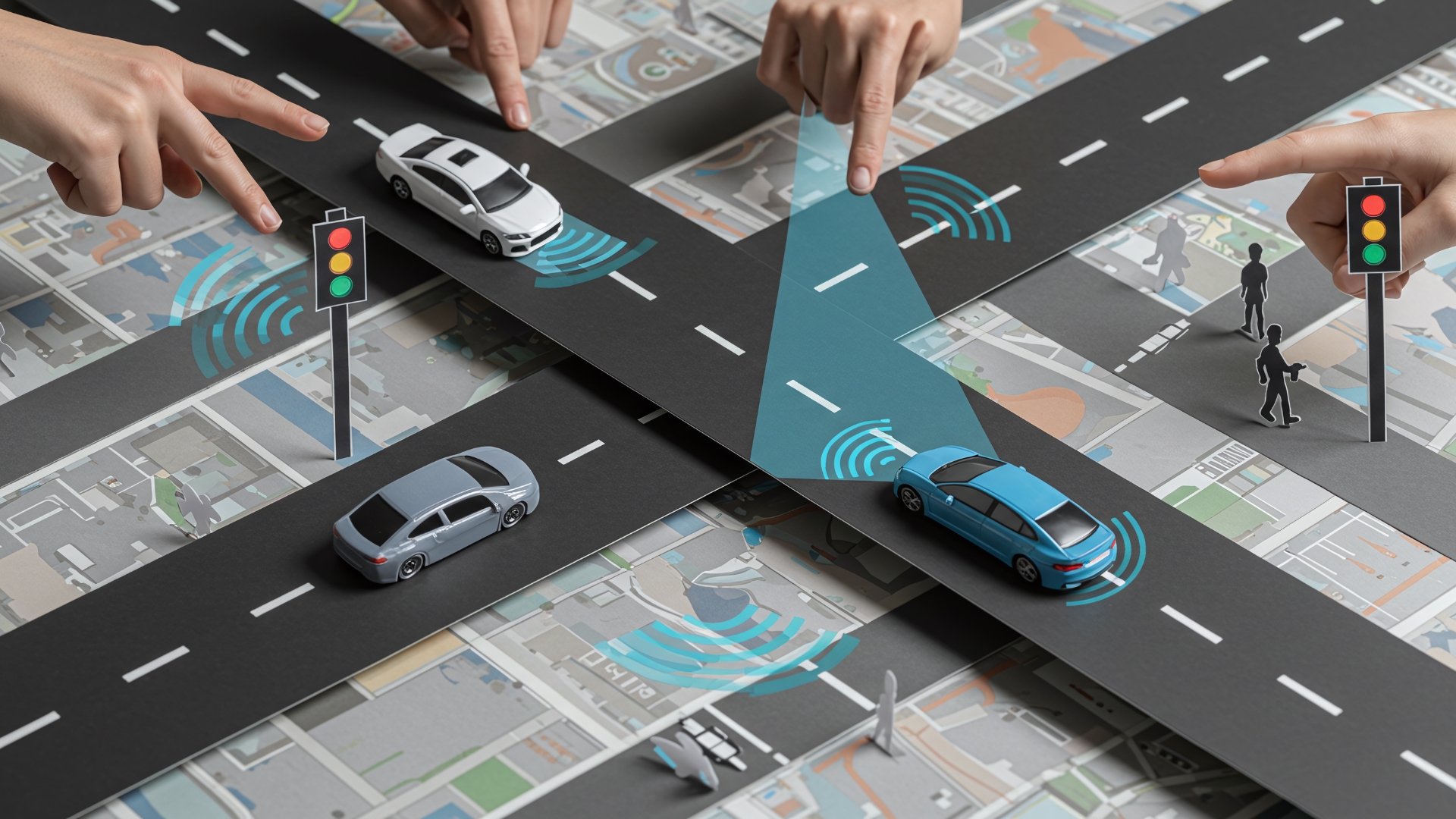
For decades, parking was treated as a secondary concern in urban planning—an afterthought solved with surface lots, guards, and paper tickets. That approach no longer works. Rapid urbanization, rising vehicle ownership, shrinking land availability, and increasing sustainability pressures have turned parking infrastructure into a critical mobility challenge. Cities are losing time, fuel, and economic productivity simply because vehicles cannot be parked efficiently.
This is where the smart parking management system has emerged—not as a convenience feature, but as a foundational layer of modern urban mobility. Today, intelligent parking is influencing traffic flow, environmental outcomes, real estate efficiency, and even public behaviour.
This article explores how parking infrastructure has evolved, why intelligent systems are becoming essential, and how they are actively reshaping the way cities move.
From Manual Lots to Intelligent Infrastructure: A Brief Evolution
Phase 1: Manual Parking Operations
Traditional parking relied on:
i) Human attendants
ii) Physical tokens or paper tickets
iii) Visual inspection of availability
iv) Static pricing
This model worked only when vehicle density was low and land was abundant.
Phase 2: Semi-Automated Parking
As congestion increased, basic automation appeared:
i) Entry/exit barriers
ii) Ticket dispensers
iii) Time-based billing
While this improved control, it did not solve the core issue: drivers still searched blindly for space.
Phase 3: Data-Driven Parking Management
Modern cities are now adopting smart parking management systems, where parking becomes a data-controlled service rather than a physical space.
This shift marks the transformation of parking from an operational task into urban infrastructure intelligence.
What Is a Smart Parking Management System (in Practical Terms)?
A smart parking management system is an integrated technology framework that uses sensors, software, automation, and analytics to manage parking spaces dynamically.
At its core, it answers three critical questions in real time:
a) Where is parking available?
b) Who is authorized to use it?
c) How efficiently is the space being utilized?
Unlike traditional systems, intelligent parking platforms:
i) Track occupancy continuously
ii) Guide vehicles instead of letting them search
iii) Automate access and billing
iv) Generate actionable insights for planners and operators
Parking stops being reactive and becomes predictive and optimized.

How Intelligent Parking Systems Actually Work?
A modern parking management ecosystem typically includes:
1. Space Detection Layer: Sensors or camera-based systems detect whether a parking bay is occupied or vacant.
2. Access & Control Layer: Entry and exit are regulated using automated mechanisms such as:
i) RFID credentials
ii) Number plate recognition
iii) Digital permits
iv) Time-based rules
3. Guidance Layer: Drivers receive real-time direction through:
i) Dynamic signboards
ii) Mobile interfaces
iii) Zone-level indicators
4. Management & Analytics Layer: Operators monitor:
i) Occupancy trends
ii) Peak demand periods
iii) Revenue leakage
iv) User behavior patterns
This layered architecture allows parking to function as a coordinated mobility service, not an isolated facility.
Why Parking Infrastructure Directly Impacts Urban Mobility?
Poor parking management creates a ripple effect across the city:
i) Vehicles circle streets searching for space
ii) Traffic congestion increases without any accident or bottleneck
iii) Emissions rise due to idling and rerouting
iv) Emergency access gets blocked
v) Public frustration grows
Studies consistently show that a significant percentage of inner-city traffic exists only because drivers are searching for parking.
By contrast, a well-implemented smart parking management system:
i) Reduces unnecessary vehicle movement
ii) Improves traffic flow without adding roads
iii) Frees up public space
iv) Supports last-mile mobility planning
Parking, when managed intelligently, becomes a traffic reduction tool.
Impact on Different Urban Environments
1. Commercial Districts: Intelligent parking improves turnover, customer experience, and revenue control while reducing congestion around business hubs.
2. Residential Communities: Residents gain predictable parking access, visitor movement is regulated, and internal traffic chaos is eliminated.
3. Transit-Oriented Developments: Parking integrates with metro stations, bus terminals, and ride-sharing points, supporting seamless multimodal travel.
4. Institutional & Healthcare Campuses: Emergency access remains clear, staff parking is optimized, and visitor flow is controlled without manual intervention.
5. Smart Cities: Parking data feeds into broader mobility platforms, influencing traffic signals, public transport planning, and policy decisions.
Key Capabilities That Define Modern Parking Intelligence
A future-ready parking management system typically offers:
i) Real-time occupancy visibility
ii) Automated vehicle access control
iii) Digital, cashless payment processing
iv) Zone-based parking allocation
v) Time and rule-based permissions
vi) Centralized monitoring dashboards
vii) Historical and predictive analytics
These capabilities allow cities and property owners to do more with the same space, rather than expanding footprint endlessly.
Economic and Environmental Benefits
1. Operational Efficiency: Automation reduces manpower dependency, human error, and operational delays.
2. Revenue Optimization: Transparent data eliminates leakage and enables dynamic pricing strategies.
3. Environmental Gains: Reduced search time means:
i) Lower fuel consumption
ii) Reduced emissions
iii) Less noise pollution
4. Better Land Utilization: Accurate data prevents overbuilding and supports smarter infrastructure investments.
The Role of Data in Shaping Future Parking Decisions
Parking data is no longer limited to billing records. Today, intelligent systems provide insights such as:
i) Peak arrival and departure windows
ii) Zone-wise utilization imbalance
iii) Duration patterns
iv) Behavioral trends
Urban planners and developers use this data to:
i) Redesign layouts
ii) Adjust pricing
iii) Improve signage and access points
iv) Plan future developments realistically
In this way, the smart parking management system becomes a planning instrument, not just an operational one.
Challenges in Adopting Intelligent Parking (and How Cities Overcome Them)
1. Initial Infrastructure Investment: Cities address this by phased deployment and modular expansion.
2. Legacy Layout Constraints: Wireless sensors and camera-based systems allow retrofitting without major civil changes.
3. User Adaptation: Clear signage, intuitive interfaces, and gradual rollout improve adoption.
4. System Integration: Open platforms enable integration with existing access control, traffic, and payment systems.
The transition is not instant—but it is inevitable.
The Future of Parking in Urban Mobility Ecosystems
Looking ahead, intelligent parking will evolve further through:
i) AI-driven demand forecasting
ii) Integration with autonomous vehicles
iii) Seamless coordination with navigation platforms
iv) Policy-driven parking enforcement
v) Parking-as-a-service models
Parking will no longer be a static endpoint. It will become a dynamic participant in city movement.
Frequently Asked Questions - Security Systems for Construction Sites
Q-1 What makes a parking system “smart”?
Ans. Real-time sensing, automation, analytics, and centralized control.
Q-2 Can intelligent parking work in older urban areas?
Ans. Yes. Modern systems are designed for retrofitting with minimal disruption.
Q-3 Does smart parking reduce traffic?
Ans. Yes. By eliminating search traffic, congestion reduces naturally.
Q-4 Is it only for large cities?
Ans. No. Even mid-sized developments benefit significantly.
Q-5 How does it support sustainability goals?
Ans. Lower emissions, better land use, and reduced fuel consumption.
Conclusion: Parking as a Strategic Mobility Asset
The evolution of parking infrastructure reflects a broader truth: cities can no longer afford inefficiency at scale.
A smart parking management system transforms parking from a daily frustration into a controlled, optimised, and data-backed service. It improves mobility without widening roads, reduces emissions without banning vehicles, and enhances urban experience without massive land acquisition.
As cities move toward smarter, more sustainable futures, intelligent parking is not optional—it is foundational.