A crowded office entrance can create a security problem before the working day even begins. Employees queue to scan access cards, visitors wait for approval, and security guards struggle to distinguish authorised entry from people following closely behind automatic flap barrier gate automatic flap barrier gate.
For facility managers searching for the best flap barriers near me, the real question is not which gate looks most impressive. It is whether the equipment can control pedestrian movement during peak hours without compromising safety or slowing employees down.
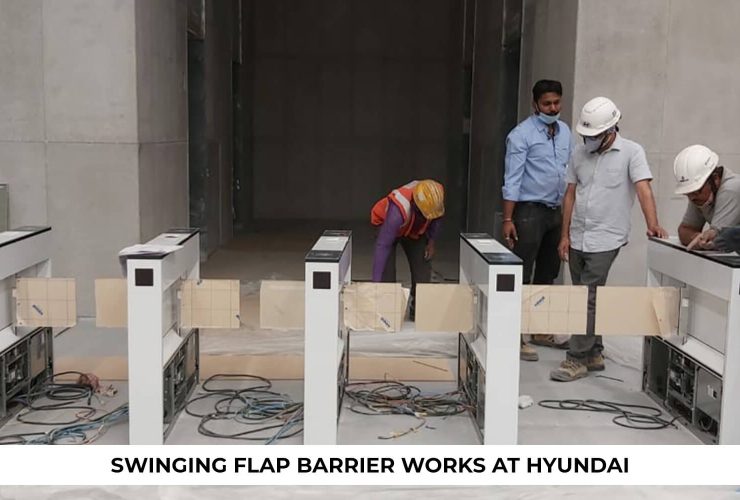
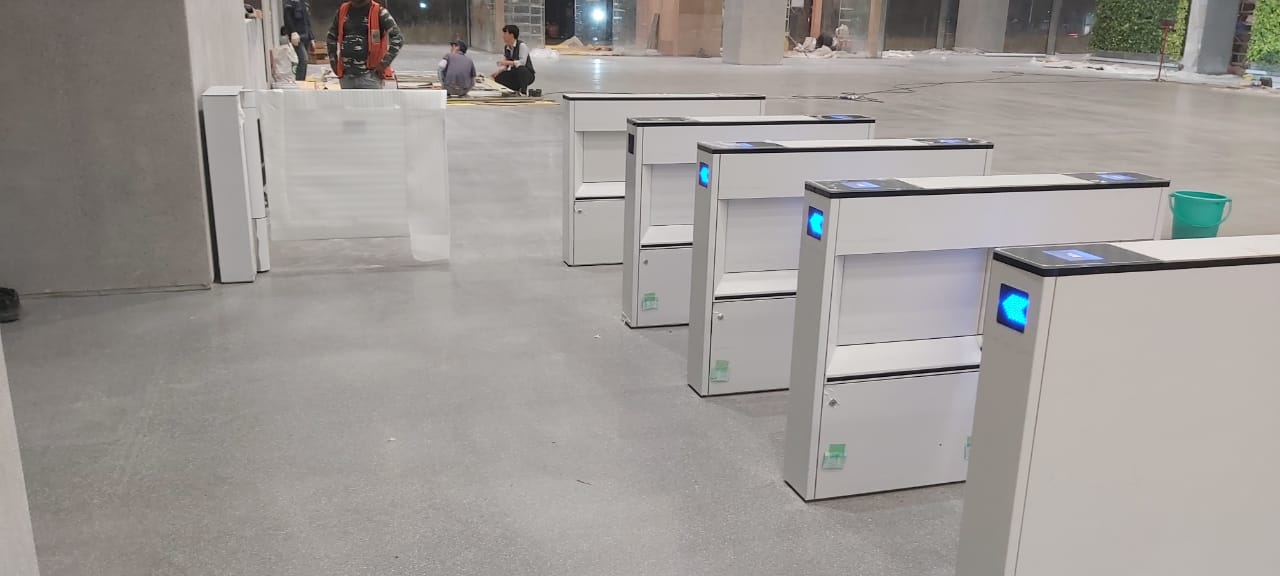
A flap barrier uses retractable panels to manage pedestrian access. Once an authorised credential is verified, the panels open and allow passage. Sensors monitor movement through the lane, while the connected controller determines who can enter flap barrier manufacturers in India.
But selecting the wrong system can create new problems: queues during shift changes, false alarms, incompatible biometric readers or an entrance that cannot accommodate wheelchair users.
Here are seven technical and commercial checks worth making before placing an order.
1. Calculate How Many People Need to Enter in 15 Minutes
Daily employee headcount is a poor starting point for selecting a flap barrier. What matters more is how many people arrive within the busiest 10–15 minutes.
Consider an IT park with 1,200 employees. If 600 employees arrive between 9:00 AM and 9:15 AM, the entrance must process approximately 40 people per minute.
That is the actual capacity requirement.
Some manufacturers advertise 35–50 people per minute for particular flap barrier models, but actual throughput depends on credential verification time, pedestrian behaviour and operating configuration.
CDN TECHNOLOGIES (INDIA) PVT. LTD.+1
For illustration, assume a practical planning rate of 20 people per minute per lane.
| Peak arrivals | Time window | Indicative lanes |
|---|---|---|
| 150 employees | 15 minutes | 1 |
| 300 employees | 15 minutes | 2 |
| 600 employees | 15 minutes | 2 |
| 900 employees | 15 minutes | 3 |
These figures are simplified capacity estimates, not guaranteed queue-free designs. A real installation should allow for uneven arrivals, visitor traffic, accessibility and operational interruptions.
If you are comparing the best flap barriers near me, ask for demonstrated throughput using the same authentication method your facility will use flap barrier access control system
2. Check Whether the Gate Detects Tailgating
A security guard may approve one employee, but two people can attempt to enter using the same authorisation.
This is called tailgating, and it is one of the most important risks to consider when evaluating pedestrian access systems.
An automatic flap barrier gate can use infrared sensors to monitor movement through the passage. Depending on the model and configuration, the system may identify unauthorised following, reverse entry or a person remaining inside the lane flap barrier gate price in India.
However, a barrier with sensors does not automatically guarantee reliable tailgating prevention.
Ask the supplier to demonstrate three scenarios:
-
One authorised employee passes normally.
-
A second person follows without presenting a credential.
-
A person enters the lane from the wrong direction.
The system should respond according to its documented security logic without creating an unsafe closing movement.
India’s STQC automatic fare collection specifications also recognise movement detection, tailgating and directional control as important gate functions.
For a corporate building, this test is more useful than simply checking how quickly the flaps open.
3. Confirm Compatibility Before Replacing Existing Access Systems
Many buildings already use RFID cards, fingerprint readers, facial recognition terminals or employee attendance software.
Replacing those systems unnecessarily can increase project costs and disrupt daily operations flap barrier gate price in India.
A flap barrier access control system should be assessed against the infrastructure already installed at the property.
For example, suppose an office uses RFID cards for attendance. The facility manager wants employees to scan the same cards at the entrance and automatically record their arrival.
The integration needs to handle more than opening the flaps. It may also need to verify access permissions, confirm successful passage and record the correct entry or exit event.
Ask the integrator to demonstrate the complete sequence:
Credential presented → access authorised → barrier opens → passage confirmed → event recorded.
Also verify what happens when an employee scans a card but walks away without passing through.
A documented procurement specification from NIT Warangal, for example, required flap barriers to integrate with an existing RFID system and produce entry and exit reports.
When selecting the best flap barriers near me, request a compatibility assessment before approving any hardware replacement.
4. Check the Passage Width, Not Just the Cabinet Dimensions
A flap barrier can fit inside a reception area while still leaving an unsuitable pedestrian passage.
The most important measurement is the clear width available when the panels are fully retracted.
Some standard flap barrier specifications list passage widths around 550–600 mm. These widths may suit ordinary pedestrian movement but should not be assumed suitable for wheelchairs, mobility aids or larger luggage.
State Bank of India
For a commercial building, the entrance design should account for:
-
Standard employee access lanes
-
A suitable accessible entrance
-
Visitors carrying luggage or equipment
-
Emergency evacuation routes
-
Space for queues without blocking circulation
A combination of standard flap barriers and a wider accessible gate may be more appropriate than using identical narrow lanes across the entire entrance.
The layout should also leave sufficient space for maintenance access and cabinet opening.
Before requesting the flap barrier gate price in India, share a dimensioned entrance layout with the supplier. This helps prevent purchasing equipment that cannot be installed in the available space.
5. Test What Happens During a Fire Alarm or Power Failure
A flap barrier controls access during normal operation, but it must not create an unacceptable obstruction during an emergency.
Emergency behaviour should be established during system design and verified during commissioning flap barrier gate price in India.
Depending on the model, the equipment may support automatic flap retraction when it receives a fire alarm signal. Some systems also provide emergency release or power-failure opening functions.
For example, published technical specifications for commercial flap barriers describe dedicated fire alarm inputs and automatic opening under emergency conditions.
Before approving a system, ask:
-
Do the flaps retract when the building fire alarm activates?
-
What happens if the main electrical supply fails?
-
Is a separate backup power source required?
-
Can security personnel release the gate manually?
-
How does the equipment return to normal operation?
These functions must be checked against the building’s approved fire-safety and evacuation design.
Buyers searching for the best flap barriers near me should insist on an actual emergency-response demonstration during installation rather than relying only on brochure claims.
6. Compare the Complete Installation Cost
The flap barrier gate price in India is not always the final amount a business pays.
A quotation may cover only the barrier cabinets and internal mechanism. Access readers, wiring, software integration, installation and commissioning may be charged separately.
For a three-lane corporate entrance, the commercial scope could include the following:
| Component | What to confirm |
|---|---|
| Flap barrier cabinets | Quantity, finish, mechanism and warranty |
| RFID or biometric readers | Included or supplied separately |
| Access controller | Compatibility and licensing |
| Cabling and power | Site preparation and electrical work |
| Installation | Anchoring, alignment and testing |
| Fire alarm integration | Required interface and commissioning |
| Maintenance | Warranty exclusions and AMC charges |
A lower equipment quotation can become more expensive when critical components are excluded.
This is particularly important when comparing flap barrier manufacturers in India with suppliers offering imported or assembled systems.
Ask every shortlisted supplier to quote against the same bill of materials. Otherwise, two prices may represent entirely different project scopes.
7. Evaluate Service Support Before Choosing a Supplier
A flap barrier operates repeatedly throughout the day. If one lane stops working at 9:00 AM, the impact can extend beyond the security department.
Employees may queue at the remaining lanes, guards may need to manage manual entry, and attendance records may require reconciliation.
That is why after-sales service matters.
When reviewing the best flap barriers near me, ask suppliers to explain how faults are diagnosed and resolved.
Important questions include whether replacement sensors, motors, controllers and flap panels are available, whether remote troubleshooting is supported, and what the service response commitments actually cover.
Also confirm whether the warranty includes labour, replacement parts and site visits.
For large offices and IT parks, it may be useful to consider an annual maintenance contract after the warranty period.
A reliable procurement decision should account for the cost of keeping the entrance operational, not just the cost of installing it.
Flap Barrier vs Tripod Turnstile vs Swing Barrier
Not every building needs a flap barrier. The correct choice depends on pedestrian volume, supervision, available space and security requirements.
| Feature | Flap barrier | Tripod turnstile | Swing barrier |
|---|---|---|---|
| Gate mechanism | Retractable panels | Rotating arms | Swinging panels |
| Typical application | Corporate lobbies, IT parks | Staff entry, controlled checkpoints | Offices, accessible passages |
| Appearance | Modern, compact | Functional, industrial | Open, architectural |
| High pedestrian flow | Often suitable | Can be slower | Model-dependent |
| Accessible passage | Requires suitable lane design | Usually needs separate accessible route | Wide-lane options available |
| Access integration | Model-dependent | Model-dependent | Model-dependent |
For a busy corporate lobby, flap barriers can provide a good balance between controlled pedestrian movement and professional appearance.
For an unsupervised industrial entrance requiring stronger physical restriction, a different type of turnstile may be more appropriate.
The decision should follow the site’s security assessment rather than appearance alone.
What to Ask Flap Barrier Manufacturers in India
Before finalising a supplier, request a written technical proposal covering the actual installation.
It should identify the proposed model, clear passage width, operating mechanism, sensor configuration, controller interfaces, emergency functions, warranty and installation responsibilities.
Ask for the equipment data sheet and a demonstration of the proposed configuration.
If the supplier claims a specific throughput rate or operating lifespan, request the testing basis for that claim.
For projects involving multiple entrances, confirm whether all lanes can be monitored through the same access-control platform.
When researching the best flap barriers near me, a supplier’s ability to answer these technical questions is a stronger buying signal than an attractive product catalogue.
Why Consider Speedgatz for Flap Barrier Solutions?
Speedgatz serves the security automation market, where pedestrian access control is an important part of managing commercial and institutional premises.
For buyers planning a new entrance or upgrading an existing security checkpoint, the purchasing process should begin with the building’s operational requirements.
Speedgatz can be approached for information about flap barrier solutions and their suitability for a proposed installation.
Before finalising a purchase, request confirmation of the available models, technical specifications, compatible authentication systems, installation coverage and service terms.
This is particularly important for projects requiring multiple lanes or integration with an existing attendance management system.
Final Thoughts
A flap barrier is a long-term component of a building’s security infrastructure. Choosing the wrong model can affect employee movement, visitor management, emergency planning and maintenance costs.
The right buying decision starts with peak-hour traffic, lane dimensions, sensor performance, integration requirements and service availability.
If you are searching for the best flap barriers near me, compare systems based on how they perform in your building rather than relying on advertised features alone.
Planning a flap barrier installation for an office, IT park or commercial property? Contact Speedgatz to discuss your access-control requirements and request suitable product information.
Frequently Asked Questions
Q.1How can I find the best flap barriers near me for an IT park?
Ans. Start by calculating peak pedestrian traffic, required lane capacity and existing access-control compatibility. Compare suppliers based on demonstrated performance, emergency functions, installation capability and maintenance support.
Q.2 What is the difference between a flap barrier and an automatic swing gate?
Ans.A flap barrier retracts its panels into the cabinet, while a swing gate opens its panels outward or inward. The better choice depends on available space, accessibility requirements, security needs and pedestrian flow.
Q.3Can flap barriers work with existing RFID attendance systems?
Ans. Yes, many models can integrate with compatible RFID readers and access controllers. The exact interface, software compatibility and attendance-recording functionality must be verified before installation.
Q.4How much does a flap barrier gate cost in India?
Ans. Pricing depends on the gate mechanism, materials, sensors, access readers, controller, number of lanes and installation scope. Request an itemised quotation rather than comparing equipment prices alone.
Q.5 What maintenance does a flap barrier require?
Ans. Maintenance typically includes checking sensors, cleaning the cabinet, inspecting moving components, testing access-control functions and verifying emergency operation. The service interval should follow the manufacturer’s recommendations and the site’s usage conditions.